Do you want to learn how to increase brand awareness and brand recognition? Then you’re in luck: this blog post aims to do just that! Also, get valuable tips for strategies and campaigns on how to build and create brand awareness through a variety of channels and campaigns.
What is Brand Awareness?
Let’s start with the definition of the phrase: brand awareness is the extent to which people in general and your target audience are aware of your brand.
Increasing brand awareness is an important stepping stone for business success and overall marketing goals.
If you have no or little brand awareness, this means:
- You are less likely to earn their trust or attention, as your customers don’t know who you are
- Low or stagnant market prices on your products or services due to low perceived brand value
- Little social impact, influence and reach due to unrecognized brand name
Brand awareness goes beyond general brand recognition (which we will discuss soon as well). It also evokes certain feelings and emotions amongst the target audience. To speak in advertising language: if your brand has a strong awareness, your marketing campaigns will mean something to your audience. You will provide them with actual value.
What is Brand Recognition?
Brand recognition represents how well consumers can correctly identify your brand based on visual and auditory factors such as logo, colors, music, sounds, packaging, etc, without hearing the brand name. To exemplify: think about how Mcdonald’s only needs an M in their road signs for people to know which brand it represents, or how IKEA is strongly identified by its blue and yellow colors.
Successful brand recognition is when consumers can separate a company’s product or service from competitors on the market. Further, successful recognition is when the visual or auditory factors are unconsciously remembered by the consumer. Think about the McDonald’s jingle, for example. Surely you hummed the “bada ba ba baa” in your head now, right? Due to this reason, companies invest lots of time and money to create brand recognition and easy ways for consumers to recall their brand!
Why is Brand Awareness important?
We have established what brand awareness and brand recognition are, but why is it important? To mention a few reasons, an increased brand awareness creates trust amongst the target audience. This way, people are more likely to recommend the brand to friends and family – which is the best kind of marketing, right? Especially nowadays, when people rely heavily on recommendations of others, by asking for people’s experiences or searching online for reviews.
Consumer trust also decreases the chances of the customer looking for other competitive brands – and BOOM: you have achieved brand loyalty!
Brand loyalty can lead to your brand, products, or services being perceived as a synonym or an identity. Think about how “coke” is sometimes used instead of the word “soda”, or how people refer to themselves as “Apple people”. These are just two examples of how brand awareness can become a part of people’s everyday life, habits, and vocabulary.
Do you remember the list of the consequences of no brand awareness, earlier in the text? Let’s turn it around! With brand awareness comes:
- You are more likely to earn customers trust or attention
- Higher market prices on your products or services due to highly perceived brand value
- Greater social impact, influence, and reach due to familiarity and positivity amongst the target audience
Brand Awareness Strategy
Okay, so brand awareness is great. But how do you increase brand awareness? Like in most cases, setting a strategy is a great place to start.
When building a brand awareness strategy, your imagination is the only thing stopping you! When planning to increase your brand awareness, there are a few steps you need to plan to achieve a great campaign, consider:
- Who is your target audience?
- What do they do?
- Where do they search for information or inspiration?
- What is your goal with your company, products, or services?
- What are your goals for your marketing activities at the moment?
Once you’ve figured out the answers to these questions, there are several channels, messages, and ways to reach your desired audience. Here are 9 strategies of how you can increase brand awareness:
Try Mynewsdesk for free!
1. Build Public relations
Public relations (PR) is the management of how others view and experience a brand, company, or person. PR is used both for positive news or trends in an industry or around a topic, and to handle reactions from the public, media, or investors, due to negative news announcements or occurrences.
By staying ahead of news and trends you will be able to influence how people view your brand, by, for example, interacting with trends or reporting on news related to your business. You can also be more proactive regarding occurrences that might harm or affect your brand negatively. By responding quickly and giving your side of the story, you can minimize the damage. You’ve surely heard the quote about how all PR is good PR. Sometimes, if bad news or a crisis is handled in a great way, it can increase not only the awareness but also the likeability of a brand.
The moral of the story is? Stay ahead of your business to be proactive about the appearance and perception of your brand.
2. Create Storytelling
Who doesn’t like a good story? Creating a narrative is a great way to humanize your brand – make it more comprehensible, more likable, and give it more depth. This is why storytelling is such a powerful marketing tool, regardless of what you’re selling!
An example of a brand with a strong narrative associated with it, is Facebook. Who hasn’t heard the “Mark Zuckerberg created Facebook in his Harvard college dorm room story”?
To create the narrative about you and your brand, consider: why did you start your business? What is the purpose of what you do or what you sell? In what ways are you solving people’s problems? Did you have experiences that other people can relate to, that made you start your business?
People love stories that are grasping or that they can relate to. People especially love stories about other people, and that is why it is both important and beneficial to humanize your brand.
Your storytelling can be about anything – but remember: it has to be true! Authenticity is powerful. Once you try storytelling – prepare yourself for a brand awareness boost!
3. Guest blogging
Blogs are another great way to distinguish amongst competitors, give your target audience real value, and show your expertise. However, all brands do not have popular blogs with lots of readers. What to do? Try guest blogging!
Think of blogs in your industry or in similar industries that you would like to be associated with. By writing a successful blog post, you will gain access to their audience. Provide them with valuable content and expertise, to make them trust your brand.
Here’s your complete list of how to successfully increase brand awareness through guest blogging:
- Do your research: find blogs and publications within your industry. See if other brands have guest blogged as well, and if so: how did they do it? Also, try to find industry keywords on Google and social channels that you would like to incorporate in your blog post.
- Contact the blog owners: when you’ve found your selected blogs; contact them with your pitch. To increase your chances even more: write an entire post to show the blog owner what to expect from you.
- Create the right kind of content: how do you in the best way reach your desired audience on the specific blog that your guest writing for. Try to match the owner’s way of writing.
4. Build an SEO strategy and increase your brand awareness

SEO, and search engine optimization, is vital to a brand’s exposure online. Why? SEO is fundamental in order for your content to get high rankings on search results pages like on Google and Bing. Improve your SEO today (!) by following these quick and easy steps:
- Research keywords in your industry and within your content categories. Which words rank the highest? These are the words that your target audiences are searching for to find products or services or brands like yours. Use them!
- Focus on informational keywords when optimizing your SEO. When building awareness amongst people unaware of your brand, match the keyword searches that people make at the beginning of their buyer journey. Often these searches aim to gather information and discover possible brands, products, or services to solve their problems.
- When you’ve found your keywords – build content around these. For example, if Halloween is coming up, people will search for pumpkins. If you sell cultivation products, you could write a blog post titled “5 creative ways to carve a pumpkin”.
- Where to place the keywords? In the headline, body, and image titles of your post– the more mentions, the easier it is for search engines to find your post (although, don’t overuse keywords either – Google will penalize you for this. Stay balanced.). Do you want to increase your organic traffic? Don’t miss this blog post!
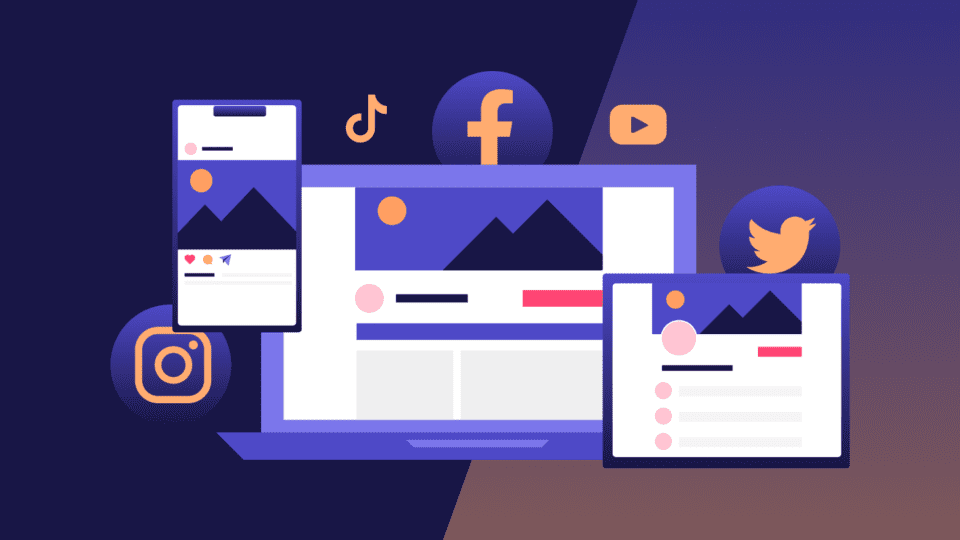
5. Social Media Branding
Social media truly is a great place to increase brand awareness! But being active on social media is not enough if you are not posting the right content in the right way. What does that mean?
If you follow these steps, you are doing it right:
- Be personal: if you are too stiff, your posts will look like a robot posted them. People like people, and people don’t like ads. Focus on creating posts that your audience wants to take part in and from which they gain actual value.
- Make it shareable: people like to be educated, informed, or entertained, and content like this will help you increase your reach by shares. Also, consider what it would take for you to share a post on social media – and try to replicate that.
- Be social: it’s called social media for a reason. You will be benefited from the platform’s algorithms if you are active, meaning posting often and in different ways, interacting with other accounts, tagging people and companies, and so on.
- Share free material: social media is a great place to give your audience a little sneak peek of your services or products, like e-books, downloadable material, infographics, etc. Take advantage of the reach social media will provide you with!
- Tell a story: remember the storytelling tactic earlier in the text? Use social media for telling your story!
6. Create infographics
Infographics are another example of great ways to show and share your brand’s expertise. If you haven’t used this as a marketing tactic yet; consider in which ways you can solve your target audience’s problems by presenting something visually.
Infographics are a great way to create consumable, shareable, and linkable content that can be used on your website, social media, in white papers, and more. Why are they so great? Firstly, because the brain processes visuals MUCH faster than plain text. Secondly, visuals tend to get more engagement, which is especially crucial when posting on social media.
Many social media platforms favor shares from friends and family over posts from brands. So focus on the receiver – create infographics that are of actual value for your audience. Your brand will be favored even if you don’t have your logo or product offers written all over it.
7. Podcast
Podcasts are a great place for you to authentically connect with your target audience by educating, informing, entertaining, or advising them, which are all great ways to build trust. You can either sponsor podcasts or start your own.
When sponsoring a podcast, the hosts of the podcast will talk about your brand or offer. They will work as influencers or ambassadors which is great since the listeners, your target audience will trust their recommendation of your brand.
If you start your own podcast, you can talk about something industry-related and gain a new audience and share your expertise. For example, if you’re a bank, talk about saving and investing. If you are clothing retail, talk about fashion trends. The possibilities are endless!
8. Influencer Marketing
If you experience trouble increasing your brand awareness amongst your target audience, consider partnering up with someone in close contact with them. Influencer marketing is a powerful way to increase your brand awareness and sales! In fact, did you know that consumers trust recommendations from influencers higher than traditional advertisements? Influencer marketing is a great way to:
- Reach a large number of people
- Reach your specific target audience
- Get recommended from a source your target audience trust
Here’s how to start your influencer marketing campaign:
- Find influencers in relevant industries
- Explore the hashtag #sponsored to find out which influencers are already working with brands in your industry
- Consider if your brand or offering would fit into their image, their content, and their feed
- Reach out to suitable influencers with partnership ideas
The collaboration between your brand and the influencer will look different depending on the influencer’s audience size and specific demands, which business you are in, and so forth. You can either give them free products in exchange for reviews or pay them for advertising your brand.

9. PPC advertising
PPC, or pay-per-click, is a model of marketing, usually on Google, where advertisers pay a fee each time one of their ads is clicked.
PPC advertising is a great way to increase your brand visibility to your audience. When your audience needs your products or services, your brand will appear at the top of their search results.
Never underestimate the power of repetition – seeing your brand name, logo, or content – even if they don’t click on the ad – will make an impact on people either consciously or subconsciously. How? The next time they need your products or services, you are more likely to be top of mind!
Brand Awareness campaign examples
Did you also buy a coke with a friend’s or family’s name on it a couple of years ago when Coca-Cola launched #ShareACoke? Do you sometimes go on YouTube to rewatch old funny commercials, like Old Spice (you know the company that advertised hygiene products in extremely humorous ways)? Or did you also throw a bucket of ice-cold water over your head to raise awareness about ALS (#icebucketchallenge)?
These are examples of brands that performed successful brand awareness campaigns. How can you tell if a brand awareness campaign is successful? It’s when you don’t forget about it afterward, even if years pass!
To summarize some bullet points from Coca-Cola and Old Spice’s successful brand awareness campaigns; these are some ideas and inspiration on how to create something similar:
- Create or use viral hashtags
- Create a buzz-worthy story or a memorable video
- Make the campaign into something physical that people can do (like sharing a bottle of coke or throwing a bucket of water on oneself or another person)

How to Measure Increase in Brand Awareness
Measuring brand awareness can be a bit difficult. How are you supposed to measure the awareness created amongst those who saw your PPC ad, but did not take action at that exact moment, for example?
Brand awareness is therefore to some extent difficult to measure, but you can measure indirect metrics that can help you identify the success of your brand awareness campaigns. Like for example, statistics on social media, coverage of your brand in different sources worldwide, keyword tracking, tracking how people interact with the content you sent them through email, and so on.
Does this sound tricky? It can be, but not with media monitoring!
Media monitoring
Mynewsdesk’s integrated media monitoring is a tool that does exactly what the name says: monitors media coverage! This is a great tool whether you want to measure the performance of your PR activities, or if you wish to stay on top of trends and current affairs in your industry.
You can use the tool in different ways. For example, by setting up search profiles with relevant keywords. The profile will monitor your brand, trends, and industry issues. You can either receive summaries as often as you wish, or you can get real-time updates so you can take immediate action.
With media monitoring, you can also follow campaigns in real-time, the outcome of it, and compare your brand with competitors. Further, you can identify potential issues related to your brand or advertising campaign ahead of time. When basing your business decisions on data, like the insights that Mynewsdesk will provide you with, you can improve your communication and make smarter business decisions.
Is your brand in multiple markets? Don’t worry – our monitoring covers millions of global sources, like editorial channels and social media as well.

Traffic
The core of media monitoring, and brand awareness, is to increase the traffic to your different channels: social media, website, blog, and so on. If you experience difficulties attracting or maintaining your desired audience, you probably need to make some changes.
There are a lot of things you can consider; maybe you’re not creating good enough content for your audience, not communicating correctly with them, maybe your brand doesn’t appear in the right places, does not have a distinguishing position on the market, and amongst competitors, or have a negative brand perception.
So how do you change all these negative factors? Through media monitoring, for example. Whether you need to track the mentions of your brand, follow your latest PR or brand awareness campaign, or discover keywords or places to market your brand – media monitoring will give you the tools, insights, and reports you need to make smarter data-based adjustments to your brand and how you market it.
Social media followers & engagement
Monitoring social media is one of the most efficient ways to keep track of your brand and increase visibility. You can, for example, monitor hashtags within your industry on social media. By doing this, you will be on top of trends and occurrences and can be proactive instead of reactive.
Interacting with trends or ongoing debates on social media is one of the best PR tricks today. Just one viral post about a trending topic could deliver greater PR results than a huge PR campaign that would have taken you months to plan. And the social media alternative will be both faster, more efficient, and cheaper!
You can track your PR KPIs and results through simple graphs and straightforward summaries provided by Mynewsdesk. Choose whether you want to receive automatic, scheduled reports or manually create your own reports. With this data, you can benchmark your PR results against your competitors within your industry and company size segment!
You can also measure this by different metrics such as mentions, comments, new followers, profile impressions, exposure, clicks to the website, and more. These are all great indicators of how much attention your brand and posts are getting!
Surveys
To find out how much brand awareness you have, a survey can be helpful. If you have a list of emails to customers or prospects who showed interest in your brand, you can send the survey to them.
With Mynewsdesk you can find out how each contact interacts with the content you sent them and thereby improve your interaction and communication with them on a more personal level.
A survey can help you measure how well recognized your brand is and from the results, you can make data-driven decisions on how to improve and develop your brand. For example, if people don’t recognize your brand logo or brand name, despite having been in contact with it before, this might be an indication that you need to increase your brand awareness.
Summary
You’ve made it until the end of this blog post, and to sum it up, these are some bullet points of what you have learned:
- What brand awareness and brand recognition is and what do the definition of the two terms are
- How to increase brand awareness through campaigns and strategies
- Examples and inspiration of other brand’s successful campaigns and strategies
- How to measure brand awareness through different measurements, metrics, and tools, such as Mynewsdesk media monitoring
A few subjects and aspects have been recurring in this article. Firstly, be where your audience is, and focus on building your awareness there. Secondly, create content that they want to take part in and share with their close ones. And thirdly; consider what purpose your brand has, and make authentic content, strategies, and campaigns according to that.
If you wish to improve your brand awareness you now have the information, inspiration, and knowledge to do so!